
How Hypnosis Helps You Lose Weight (Without Another Diet)

You’ve done the diets. All of them, probably. The one where you counted every calorie. The one where you cut out entire food groups. The one where you were so good for three weeks that you were sure this was the time — and then one hard day, one late night, one office birthday cake, and the whole thing unraveled. And the weight came back. Usually with a little extra, like it was making up for lost time.
Here’s what nobody in the diet industry will tell you: it wasn’t your fault. And it wasn’t a lack of willpower.
Willpower was never the problem. The problem is that the part of you reaching for food at 9pm isn’t the part of you that decided to diet at 9am. The decision lives in your conscious mind. The reaching lives somewhere deeper — in the subconscious, where the old patterns run on autopilot. And autopilot always beats a decision. Every time.
That’s why another diet can’t fix it. Diets work on the behavior. The pattern lives underneath the behavior. Until something changes down there, you’re just trimming the same branches and watching them grow back.
Why Diets and Willpower Don’t Stick
Think of your mind like a thermostat. Your conscious mind sets the temperature — “I’m going to eat clean this week, I’m going to lose the weight this time.” But the thermostat itself, the setting the house actually runs at, lives in the subconscious. And that setting was programmed years ago, mostly without your permission.
A childhood where food was the reward. A stressful job where sugar was the only break in the day. A season of life where eating was the one comfort you could count on. Each experience wrote a line of code: When I’m stressed, I eat. When I’m tired, I reach for sugar. When I’m lonely, food is there.
By adulthood, those lines run automatically. You’re not choosing to raid the pantry at 9pm. The program is choosing for you. Willpower tries to override the program. Diets try to starve it. But neither one can rewrite it — because the program doesn’t live on the floor where willpower works. It lives below.
And here’s the part that makes it worse: every failed diet writes another line. I can’t stick with anything. I always gain it back. This is just who I am. The diet didn’t just fail to fix the pattern. It fed the pattern. That’s why the next diet starts from a harder place than the last one.
Which brings us to the good news — because there is good news, and it’s the whole point of this article.
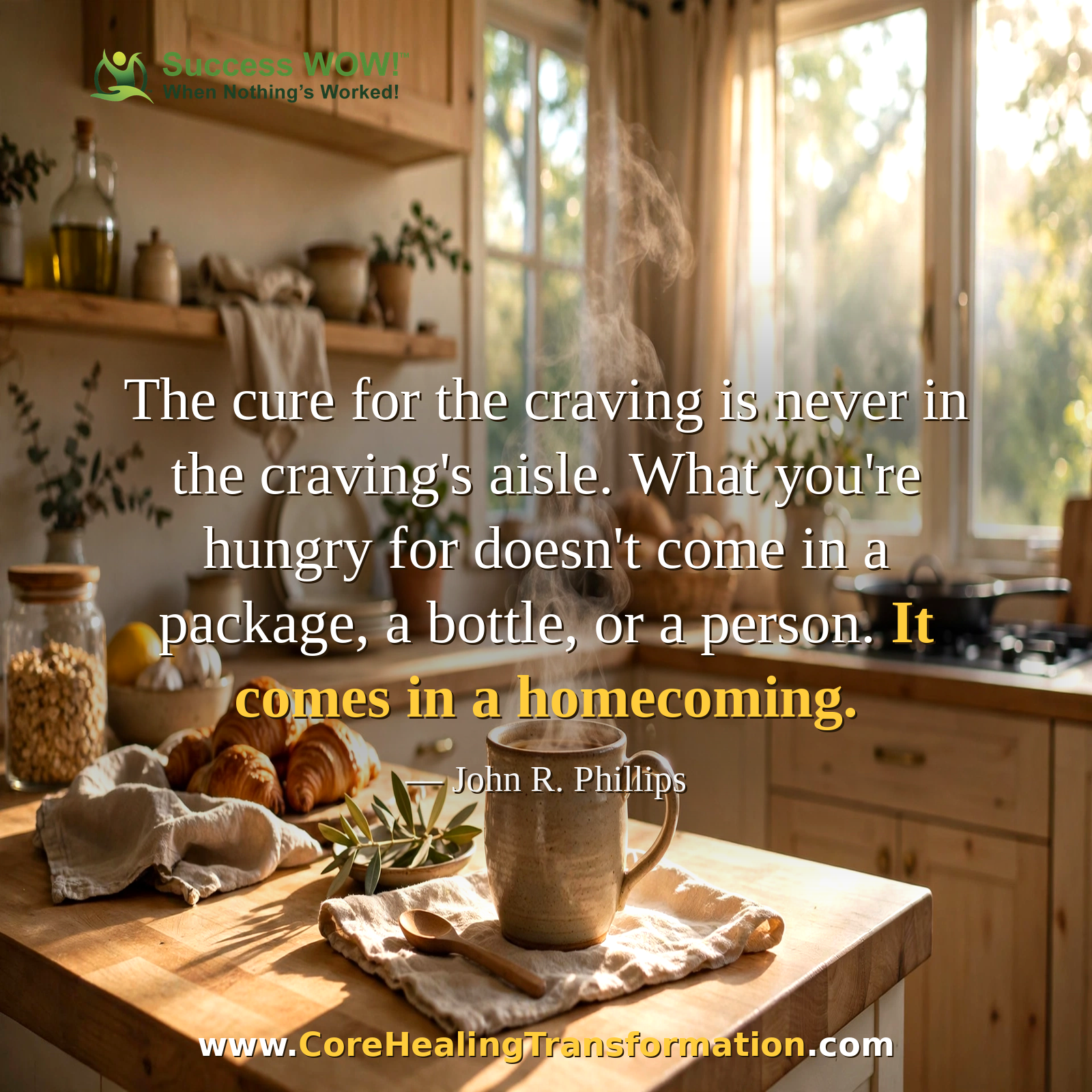
“The cure for the craving is never in the craving’s aisle. What you’re hungry for doesn’t come in a package, a bottle, or a person. It comes in a homecoming.” — one of my Friday quotes, and the truest thing I know about weight loss.
How Hypnosis Works for Weight Loss
Hypnosis isn’t what movies made you think. You’re not asleep, you’re not unconscious, and nobody’s controlling you. You’re deeply relaxed and highly focused — like that state right before you drift off to sleep, where you’re still aware but the chatter quiets down. In that state, the door between the conscious decision and the subconscious program opens. And that’s where the real work happens.
Here are the mechanisms that actually change things:
1. It dissolves the craving at the root. This is the one people notice first. In a relaxed, focused state, we find the pattern underneath the craving — the old recording that says sugar is comfort, sugar is relief, sugar is the reward you earned. And we dissolve it. Not by fighting it. By letting the deeper part of your mind finally let it go. Clients describe it the same way, over and over: the craving just isn’t there anymore. The food is still in the pantry. It just stopped calling your name. In my work I call that process the Toxic Pattern Vanisher™ — finding the old pattern underneath the craving and dissolving it at the root, so the urge stops recycling itself.
2. It rewires emotional eating. Most weight that won’t come off isn’t about hunger. It’s about stress eating, boredom eating, loneliness eating, tired eating — food as the fastest comfort available. Boredom deserves its own mention: it’s one of the sneakiest triggers, and it’s really a message that some part of you wants to grow. I break down what each emotion is actually telling you in How to Handle 10 Emotions in Three Easy Steps. Hypnosis traces that pattern back to where it started. Sometimes it’s a recent habit. Sometimes it goes much further back, to the roots of an old wound — and yes, I do work with those roots. Through age regression in the Core Healing Transformation™, we go back to where the pattern was installed and transform it at the source. I’m not a licensed therapist, so if you’re dealing with an active mental-health condition, a therapist is the right call and I’ll say so. But the patterns underneath the eating — the comfort-seeking, the numbing, the old recordings — that’s exactly what this work transforms.

3. It changes your self-image. Here’s the part diets never touch: the picture you carry of who you are. If that picture is “someone who always gains it back,” your subconscious will work overtime to make the picture true. In hypnosis, we install the accurate version instead — not a fantasy, but the believable truth: someone who eats when hungry, stops when satisfied, moves because it feels good. The subconscious accepts what’s believable, and believable is enough to change behavior. You start making choices that match the new picture without white-knuckling every one of them. The lighter version of you stops being someone you’re trying to become and starts being someone you’re remembering.
4. It calms the nervous system. Stress is the hidden engine of weight gain. A stressed nervous system craves quick energy — sugar, carbs, anything fast — and it holds onto weight like it’s preparing for a famine that never comes. Hypnosis directly calms the nervous system: slows the breathing, relaxes the muscles, lowers the internal volume. A calm system stops demanding sugar for fuel. Sleep deepens. Decisions get easier. And the whole project of losing weight stops feeling like a war and starts feeling like a homecoming.

What a Session Actually Feels Like
People are usually surprised by how ordinary it feels — in the best way.
You sit in a comfortable chair, fully clothed, eyes closed. I talk you through a relaxation process — nothing strange, just guided breathing and focusing your attention inward. Within minutes, most people feel heavy and light at the same time: body sinking, mind clear. You can hear everything I say. You could open your eyes and get up at any point. Many people tell me afterward it felt like the best nap they never quite took.
Then we do the work — the finding, the dissolving, the re-recording. You’ll be aware of it happening; clients often describe it as watching an old craving lose its charge in real time, like a radio station fading out as you drive away from it. There’s no dredging up of things you can’t handle. Your subconscious is protective; it shows you what you’re ready to see.
When you come back up, the room looks the same. But something internal has shifted. People usually notice it in small moments first: walking past the break-room donuts without the usual war in their head. Leaving food on the plate — and not thinking about it again. Catching the 9pm pantry pull mid-step, and actually finding it kind of funny.
Try This Today: Three Practical Takeaways
You don’t have to wait for a session to start shifting things. Here’s what actually works:
1. Pause before the pantry. The craving hits — 9pm, tired, the kitchen calling. Don’t fight it and don’t obey it. Just pause for sixty seconds. Three slow breaths. Then ask one question: “What am I actually hungry for?” Rest? Comfort? A break from the day? Half the time, the answer isn’t food at all. And when you give yourself the real thing — rest, comfort, ten quiet minutes — the craving loses its job.
2. Eat like the lighter you eats. Not a diet. A rehearsal. Smaller plate. Slow down. Put the fork down between bites. Stop at satisfied, not stuffed. You’re not restricting yourself — you’re practicing being the person who already eats this way. The subconscious reads repetition as truth, and every meal eaten this way is a vote for the new picture.
3. Move like someone who likes their body. Not punishment. Not penance for what you ate. Just partnership. A ten-minute walk after dinner. Stretching while the coffee brews. Movement your body actually enjoys, done because it feels good, not because you earned it. When movement stops being a punishment, it stops being something you avoid — and it starts being something that carries the weight off with it.
Picture the Shift
Three short scenes to show what the change actually looks like. These are illustrations — made-up moments, not stories from real clients.
Imagine it’s 9pm, and the pantry is calling. You’re tired, the day was long, and the old program is already running: just one handful, you’ve earned it. This time, you pause. Three breaths. “What am I actually hungry for?” The answer is rest — you’re exhausted, not hungry. You make tea, you go to bed twenty minutes early. The pantry stays closed. And the next night, the call is quieter.
Imagine the office birthday cake. It used to be automatic: a slice because it’s there, another because everyone else is having one, and then the rest of the afternoon feeling heavy and annoyed with yourself. This time, you notice the pull as a pattern, not a command — “there’s that old recording again” — and you decide. Maybe you have a small piece and enjoy it. Maybe you skip it and don’t think about it again. Either way, you’re the one deciding. The cake stopped deciding for you.
Imagine the grocery aisle. You used to walk it on autopilot, the cart filling itself with the usual comfort foods. This time, something’s different. You pass the craving’s aisle, and it doesn’t pull. Not because you’re fighting it — because there’s nothing left to fight. The cure was never in that aisle. What you were hungry for was a homecoming, and you’re already on your way home.
That’s what the shift looks like. Not a new personality. Not a new diet. Just you, with the old recordings turned down — and your body finally free to follow.

The Deeper Invitation
Here’s the nondual-friendly truth I keep coming back to: your body was never the enemy. It was carrying the patterns the only way it knew how. The weight was never the problem. The weight was the symptom. And symptoms don’t need a war — they need the root to be seen, understood, and transformed.
When the root transforms, the branches stop needing to be trimmed. The cravings quiet. The eating settles. The weight — the part of it that was never really about food — starts to come off on its own, because the program that was holding it in place is gone.
If there’s a pattern that keeps running no matter what you try — the same cravings, the same late-night eating, the same weight coming back on repeat — that’s usually a sign it’s rooted deeper than conscious effort can reach. That’s exactly what I help people with.
Questions People Ask
Will I have to go on a diet?
No. This work is about the patterns underneath the eating, not a meal plan. Most people find their appetite and their choices shift on their own once the cravings and the emotional eating quiet down — no counting, no forbidden foods, no starting over on Monday.
How fast will I lose weight?
I’ll be straight with you: I don’t promise pounds or timelines, because everyone is different and anyone who guarantees a number is selling you something. What changes first is usually the cravings and your relationship with food — and the weight follows the pattern change, not the other way around. The strategy session is where we look at your specific pattern and talk honestly about what it would take.
Is this only about sugar cravings?
Sugar cravings are the most common door in — they’re where the pattern shows up loudest. But the work covers the whole picture: emotional eating, portion habits, the self-image underneath all of it. The Vanish Your Sugar Cravings Weight Loss Session is a good starting point: a 90-minute full session, regularly $450.00, now only $167.00.
Does hypnosis work online?
Yes. Once your eyes are closed, the process is identical — and the change is anchored in your own environment, where the patterns actually live. That’s why it often works even more successfully online. All my sessions are available by Zoom.
I offer a complimentary 30-minute Zoom strategy session — no pressure, we just see if what I do can help. Text me at (801) 638-4413. If it’s a fit, we’ll know. If it’s not, you’ll still leave with something useful.
With 83 five-star Google reviews from people who walked in feeling the way you feel now, I can tell you this much: the lighter version of you isn’t some stranger you have to become. It’s you, underneath the recordings. Let’s find them.
You’ve got this. One craving, one pattern, at a time.
Keep Reading
- Stop Smoking Hypnosis: The Definitive Guide to Quitting Nicotine Fast
- How to Achieve Your Own Core Healing
- What Is Hypnosis And How Can It Help You In Your Life?
- How to Kill Your Sugar Cravings Using Hypnosis
- What if freedom from 100% of your stress can be achieved by letting go?
- Is Hypnosis for Children?
- Procrastination solved with hypnosis
- Eliminating Bad Habits with Hypnosis Fast
- Is Hypnosis Science Based?
